
The Truth About Seasonal Hair Shedding. Why You Don’t Need to Panic?
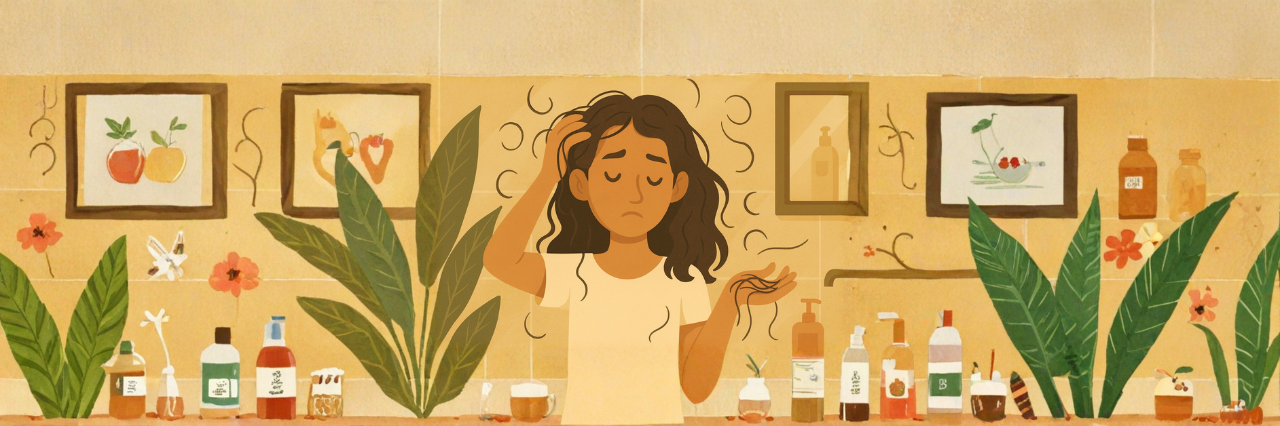
Let’s talk about something almost everyone experiences but very few people feel comfortable admitting. That moment when you look down at the shower drain or your hairbrush and think, “Okay… please tell me this is normal?” 😅
If you’ve had that moment, especially during fall or spring, you’re in good company. What you’re noticing is something called seasonal hair shedding, and despite how unsettling it can feel, it’s usually nothing to worry about. In fact, it’s something your body expects to do.
So let’s dive in together, gently and honestly, into what’s really going on with your hair during seasonal transitions, why it happens, and how you can support your hair and scalp through it. Grab a warm drink ☕, settle in, and let’s make sense of all those extra strands.
So… What Is Seasonal Hair Shedding?
Think of seasonal shedding as your hair’s very own “spring cleaning” 🧼 (even when it happens in the fall). Your hair naturally grows in cycles — some hairs grow, some rest, some fall — and throughout the year, a certain percentage of follicles shift into a resting phase all at once. When those resting hairs eventually shed, it can feel like everyone decided to leave at the same time.
Most people notice this between late summer and early fall, and then sometimes again as winter melts into spring. It doesn’t mean your hair is thinning. It doesn’t mean you’re going bald. It just means your hair is following its natural rhythm. 🌿
How Much Hair Is Normal to Lose?
On a regular day, the average person sheds about 50–100 hairs. During seasonal shedding, that number can go up a bit — maybe 100–150 hairs. And while that sounds like a lot, keep in mind: most people have over 100,000 hairs on their head.
It’s like taking a spoonful of sand from a beach. It looks dramatic in your hand, but the beach still looks exactly the same. 🌊✨
How Long Does This Shedding Last?
Most people notice it for about six to twelve weeks. It’s not usually a straight line from “a little shedding” to “a ton of shedding” and back again. Some days will feel dramatic. Others won’t. It’s all part of the cycle. Once the resting hairs have fallen, your growth phase continues as normal, and new hair quietly starts growing beneath the surface. 🌱
What You Can Do to Support Your Hair During Shedding Seasons
Let’s get one thing out of the way: you can’t stop seasonal shedding entirely, because it’s a natural biological event. 🍃 But you can make the process gentler on your hair, calmer for your scalp, and shorter overall. Think of it like supporting yourself during allergy season or adjusting to daylight savings — your body appreciates a little extra help.
Start by giving your body what it needs internally. Your hair is basically built from protein, so make sure you’re getting enough of it. Iron, zinc, omega-3s, and vitamins D, E, and B also play helpful roles. If your eating habits shift with the seasons, don’t be surprised if your hair responds to that.
Your scalp will thank you if you show it a little love. A gentle massage in the shower, a weekly scalp exfoliation to keep things clear, and a nourishing conditioner or hair mask can work wonders. Your scalp is skin — sometimes we forget that — and it loves being treated with the same care as your face. 💆♀️✨
Try to protect your hair from the weather, too. The sun can be rough on hair, so a hat in summer isn’t just cute — it’s functional. Winter air can dry the scalp out, so running a humidifier at home might help more than you expect.
And during shedding seasons? Be gentler than usual. Looser hairstyles. Less heat. Less tugging. More kindness. Your hair is already in “rest mode,” so think of it as treading lightly. 🤍